

As we look toward 2026, interior design is evolving beyond mere aesthetics to embrace holistic well-being, sustainability, and personalized joy. At Crisolite Designs, we're pioneering trends that blend warmth with wellness, restraint with expression, and luxury with responsibility.
Warm Minimalism Meets Dopamine Decor
Say goodbye to sterile whites. 2026 is about cocooning interiors in terracotta, sage green, and ochre colors that ground you while sparking joy. We layer these with dopamine decor accents: a chartreuse accent chair, a cobalt blue backsplash, or a blush pink reading nook.
Biophilic Design 2.0
Beyond potted plants, we integrate living walls, water features, and natural ventilation strategies to improve air quality index (AQI) indoors. Health-conscious clients in polluted metros are investing in homes that literally help them breathe better.
Japandi Maximalism
The hybrid aesthetic marrying Japanese restraint with Scandinavian coziness now gets a maximalist twist think bold patterns on one statement wall, the rest kept serene. It's controlled chaos that feels intentional.
Sustainable Interior Design Materials as Standard
Bamboo flooring, recycled glass tiles, and FSC-certified wood aren't premium add-ons anymore they're baseline expectations. We audit every supplier for ethical sourcing because your values shouldn't end at your front door.

Finding the right interior designer can make or break your dream home. With so many options available, how do you separate the professionals from the amateurs? Here's a comprehensive guide to help you make an informed decision.
Red Flags:
• No physical office or showroom visits
• Reluctance to share past project photos or client references
• Vague contracts without itemized costs
• Pressure to sign immediately with "limited-time discounts"
Green Flags (That's Us):
• Transparent interior design cost per sq ft breakdowns
• Portfolio showcasing diverse styles (not one-size-fits-all)
• Willingness to work with your existing furniture or family heirlooms
• Clear communication channels (dedicated WhatsApp group, weekly site meetings)
• Flexibility to course-correct mid-project without penalties
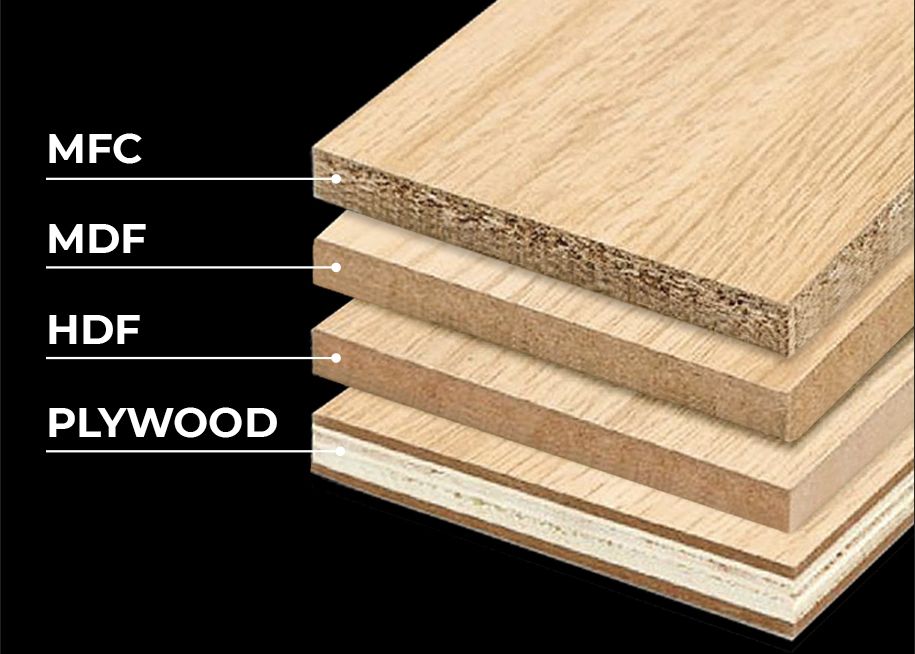
Crafting Interiors That Last with the Right Material Choices. When it comes to designing stunning, durable interiors, understanding the materials behind the finished look is essential. From luxurious wardrobes to bespoke kitchens, the right substrate can make all the difference — not just in appearance, but in performance. Let's demystify the most commonly used engineered wood boards and guide you on where and why to use each one.
1. Plywood — The Classic Backbone of Interiors
What it is:
Plywood is created by bonding multiple thin layers (veneers) of natural wood with each layer's grain at right angles — making it strong, warp-resistant and versatile.
Where to use it:
✔ Furniture frames (beds, sofas, tables)
✔ Heavy load-bearing parts of wardrobes
✔ Areas with occasional moisture (choose the right grade)
Which grade to pick:
• MR (Moisture Resistant) – Ideal for dry areas like living rooms and bedrooms.
• BWR (Boiling Water Resistant) – Great for kitchens where occasional humidity is expected.
• BWP / Marine Grade (IS 710) – Premium choice for wet areas, kitchens & semi-outdoor applications.
Luxury Brand Suggestions (India):
• Century Ply Sainik 710 BWP / MR – reliable and cost-effective.
• Greenply BWP / MR variants – well-respected quality boards.
• Also consider brands like Bond, Club Prime & other premium grades depending on budget.
2. MDF (Medium Density Fiberboard) — Perfect for Smooth Finishes
What it is:
Engineered from wood fibers and resin, MDF has a smooth, uniform surface — ideal for painting, laminating and intricate cutouts.
Where to use it:
✔ Cabinets & wardrobe shutters
✔ Decorative wall panels
✔ Painted or lacquered furniture
Things to remember:
• Standard MDF absorbs moisture, so it's best used in dry interiors.
• It's fantastic for design-forward, seamless painted looks but not the best where moisture is present.
Brand Suggestions:
• Plyneer Interior Grade MDF (versatile interior MDF)
• Century MDF
• Greenpanel / Archidply MDF
(Note: these brands provide quality finishes suitable for refined wardrobe and cabinetry work)
3. HDHMR (High Density High Moisture Resistance) — The Premium Performer
What it is:
HDHMR is a high-density engineered board — denser and stronger than regular MDF, and highly resistant to moisture and termites. It bridges the gap between plywood and MDF in performance.
Where to use it:
✔ Modular kitchen shutters & cabinet carcasses
✔ Bathroom vanities & wardrobe interiors
✔ High-humidity zones where water resistance is crucial
Why designers love it:
• Excellent screw holding — keeps fittings secure over years.
• Very low swelling even in humid environments.
Luxury Brand Suggestions:
• Plyneer HDiHMR Board
• HDiHMR MDF Board - HighDensity & Moisture Resistant
• 12 MM HDHMR Greenpanel MDF / 6 MM HDHMR Greenpanel MDF
• Action TESA HDHMR
• Greenply HDHMR
• Century & Rushil (Vir) HDHMR variants
4. HDF (High Density Fiberboard) — For Heavy-Duty Load & Flooring
What it is:
HDF has even higher density than MDF and is often used in flooring or specialized applications where strength and impact resistance are priorities.
Where to use it:
✔ Flooring underlays
✔ Heavy-duty wall panels
✔ Wherever maximum strength is a priority
When to choose HDF over HDHMR:
Only where moisture resistance isn't critical (HDF on its own can swell with water). For kitchens and humid zones, choose HDHMR instead.
Quick Material Decision Guide
| Area of the Home | Best Material |
|---|---|
| Bedrooms / Dry Interiors | MDF / Premium Plywood |
| Wardrobes (Humid Climates) | HDHMR Boards |
| Modular Kitchens | HDHMR + BWP Plywood combination |
| Bathrooms / Wet Areas | Marine / BWP Plywood, HDHMR (sealed) |
| Decorative Wall Panels | MDF / HDF |

Most people think interior design is just about looks. Nice sofas, fancy lights, matching colours. But in reality, good interior design increases your property value, improves daily living, and even saves money long-term. Let's break this myth once and for all.
Introduction
Most people think interior design is just about looks. Nice sofas, fancy lights, matching colours. But in reality, good interior design increases your property value, improves daily living, and even saves money long-term. Let's break this myth once and for all.
1. Poor Interiors Cost You More Than You Realize
When interiors are done without planning:
• Extra carpentry rework
• Wrong material choices
• Poor lighting leads to higher electricity bills
• Wasted space that still feels cramped
These mistakes usually cost 15–25% more over time.
2. What a Professional Interior Designer Actually Does
A professional interior designer:
• Understands your lifestyle, not just your floor plan
• Designs storage to reduce clutter
• Selects materials based on durability, not showroom shine
• Plans lighting scientifically (task + ambient + accent)
• Works within your budget — not beyond it
This is where money is saved, not spent.
3. Higher Rental & Resale Value
Well-designed homes:
• Rent faster
• Attract better tenants
• Sell at 8–12% higher value compared to non-designed homes
Buyers or Tenants don't negotiate much when they feel the "wow factor".
4. Daily Comfort = Daily Happiness
Good interiors:
• Reduce stress
• Improve productivity (especially work-from-home homes)
• Make small homes feel larger
• Improve ventilation & natural light flow
Your home should recharge you — not drain you.
Closing
Interior design is not about luxury.
It's about living smarter, better, and future-ready.

One of the most common questions homeowners ask when planning interiors is: "Should we go for modular interiors or custom work?" Most decisions are driven by quotations and timelines. However, the real difference lies not in price — but in process, quality control, and long-term performance.
Introduction
One of the most common questions homeowners ask when planning interiors is: "Should we go for modular interiors or custom work?" Most decisions are driven by quotations and timelines. However, the real difference lies not in price — but in process, quality control, and long-term performance. There is no one-size-fits-all answer, but there is a right approach for homes that demand durability, hygiene, and consistent quality.
1. What Are Modular Interiors?
Modular interiors are factory-manufactured units produced in controlled environments and assembled at site.
Key Advantages
• Factory-controlled quality and finish
• Lamination applied on both sides of the board
• Uniform bonding using hydraulic press machines
• Predictable timelines and transparent costing
Best Suited For
Kitchens, wardrobes, and high-usage areas where precision and durability are non-negotiable.
2. What Is Site-Made (Carpenter-Based) Interior Work?
Site-made interiors are fabricated and assembled entirely on-site using manual tools and processes.
Limitations
• Lamination often applied only on visible surfaces
• Inner surfaces may remain unfinished or hand-pasted
• Manual pressing using tapes or clamps causes uneven bonding
These compromises are not visible immediately — but reveal themselves over time.
3. Why Modular Interiors Win on Quality & Consistency
When quality, hygiene, and longevity matter, modular interiors clearly outperform site-made work. Factory production ensures:
• Two-side lamination for board stability
• Machine-applied pressure (up to 40 tons) for strong bonding
• Controlled curing and sealing processes
• Zero air gaps and minimal warping
Result
• Approximately 15–20% higher initial investment
• Up to 5 times longer product lifespan
• Minimal maintenance and predictable performance
This is why modular execution is the recommended standard for modern homes.
4. Common Problems Seen in Low-Cost Interior Execution
Clients often become aware of quality compromises only after facing:
• Laminate bubbling or peeling
• Moisture absorption near sink and kitchen areas
• Board swelling and edge damage
• Termite or insect infestation
• Short product lifespan, especially in rental homes
These issues directly impact daily usability and long-term costs.
5. Factory Finish vs Site Carpentry — The Real Difference
Factory Finish (Recommended – Modular Execution)
• Lamination done on both sides
• Hydraulic press machines ensure uniform bonding
• Use of waterproof adhesives, primers, and sealants
• Consistent quality across all units
Outcome: ✔ Higher durability ✔ Better hygiene ✔ Long-term peace of mind
Site Carpentry (Budget-Driven Approach)
• Manual lamination and pressing
• Uneven pressure creates air pockets
• Higher risk of failure over time
Outcome: ✖ Lower upfront cost ✖ Higher long-term risk
A simple comparison helps clarify the choice: Would you trust manual bonding over industrial-grade machine pressure?
6. Where Hybrid Interiors Make Sense
While modular interiors deliver unmatched quality in high-usage zones, hybrid interiors enhance space utilisation and personalization.
The Ideal Hybrid Approach
• Modular execution for kitchens and wardrobes
• Custom-designed elements for TV units, pooja units, partitions, bar units, and storage walls
Why This Works
• Factory-grade quality where performance matters
• Customisation where space optimisation matters
• Balanced investment without compromising standards
Hybrid interiors are not a compromise — they are a strategic upgrade.
7. Why This Matters Even More for Rental & High-Usage Homes
Rental and high-traffic homes experience:
• Rough daily handling
• Frequent water spillages
• Continuous shutter and drawer movement
Using modular and hybrid interiors ensures:
• No swelling even if water reaches cabinet bases
• Stable shutters and drawers over years
• Reduced tenant complaints
• Better rental yield and resale value
8. One-Time Investment, Long-Term Peace of Mind
Interior work is not a recurring expense — it is a one-time investment. Saving a small amount initially can lead to:
• Repairs and replacements
• Loss of rental income
• Reduced property value
Choosing factory-finished modular systems and quality-driven hybrid solutions protects your investment and eliminates unnecessary future costs.
Closing Thought
The real choice is not between modular or custom carpentry. It is between controlled quality and uncertain workmanship. For most modern homes:
• Modular interiors are the strongest foundation
• Hybrid interiors are the intelligent enhancement
• Pure site-made carpentry is best avoided for long-term value
A responsible interior partner recommends process-backed quality, not shortcuts.


Copyright © Crisolite Solutions. All Rights Reserved.
